Donate
The Charlie Watkins Foundation’s founder, Harry Watkins, has been awarded a Points of Light award from the Prime Minister.
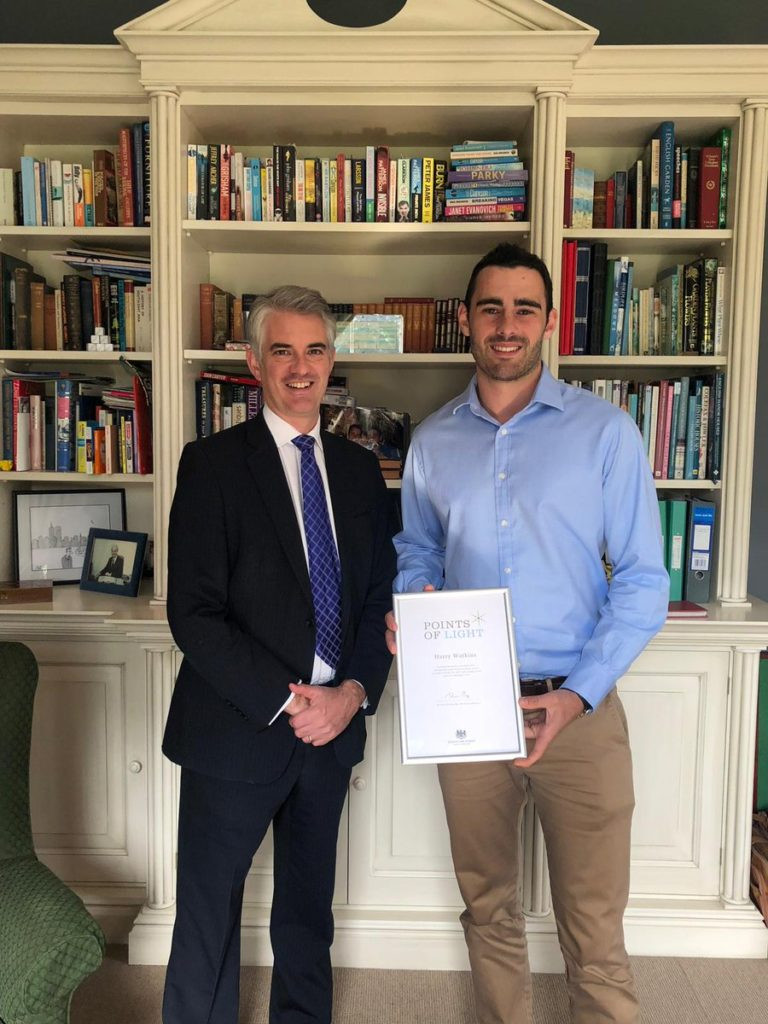
The Charlie Watkins Foundation’s founder, Harry Watkins, has been awarded a Points of Light award from the Prime Minister.

More than 800,000 people commit suicide annually and, according to the World Suicide Prevention organisation, every suicide affects 135 people.
This means that 108 million people are bereaved from suicide every year.
With World Suicide Prevention Day coming up on 10th September, it’s more important than ever to make a change and prevent it.
The Charlie Watkins Foundation was set up in 2017 a few months after Charlie Watkins took his life. Charlie never recovered from the tragic loss of his mother when he was nine years old and struggled with his mental health throughout his life.
Charlie’s twin brother Harry set up the foundation in his memory. The initial objectives of the foundation were to increase awareness in mental health issues in young people, encourage vulnerable young people to talk and to accelerate the provision of counselling services to young people.
Since then, the foundation has gone from strength to strength. On the anniversary of Charlie’s death, the foundation launched Chat with Charlie in conjunction with the University of Essex and Mid and North East Essex Mind. Chat with Charlie is a one-on-one online platform in which students at the university can speak to trained volunteers about their mental health and wellbeing.
In time, the foundation is hoping to roll Chat with Charlie out to other universities including the University of Suffolk and the University of York, where Charlie was a student. To help them get closer to their goal, you can volunteer your time to the Charlie Watkins Foundation or donate on the JustGiving page. Help us make a difference.

The last couple of weeks will have been incredibly intense and stressful for young people. In August every year, GCSE and A-Level results are made available, which go on to determine what your next steps may be. If you didn’t get the results you were hoping for, you don’t need to fret. There are plenty of options available to you – the most important thing is to not panic.
For GCSEs:
On the day you get your results, your teachers will be on hand for support. You can speak to them about anything that is troubling you and they will offer you advice on what to do next.
You can also investigate getting your papers remarked to see if anything has been missed.
If you’ve missed your place at sixth form or college, it’s always worth enquiring with them to see if they will still accept you, especially if there were mitigating circumstances.
For A-Levels:
If you’ve missed out on your chosen course, you can apply for a place in your course through clearing. Even though you might not go to your first choice university, you can still get the degree you desire.
You can always take a gap year after your A-Levels to decide what your next steps will be, that way there’s no pressure to decide away.
Similarly to GCSEs, you can get your papers remarked to check if anything has been missed.
It’s always tough when you get the results you’re not expecting, but there are always other options that can aid you. If you’ve just got into university, look at our blog at five things to look out for if you think your housemate is struggling with their mental health.

It can be difficult to watch a loved one struggle with their mental health. It can also be hard to know what to say or do when they’re having a tough time. There are lots of things you can do to help though – take a look at our five tips on how to help a loved one with their mental health:
1. Listen
Often just listening to your loved one can help in abundance. Offering them a safe space to talk and to know that they are feeling heard can lift a huge weight off their shoulders and also shows them that you care.
2. Look for information
It might be worth finding out more about what is ailing your loved one, so you understand more about it and offer sound advice. Just make sure you’re finding information that is reliable – you’ll know if it is by the Information Standard quality mark.
3. Patience
It can be frustrating for you as well as for them if they can’t talk to your straight away or reveal as much information. Remember to be patient and let them know that you’re there when they are ready.
4. Empathy
Try and imagine yourself in their shoes and think about how you might feel. Offer them reassurance and let them know that they’re not alone in how they feel. Stay calm and take things and their own pace.
5. Look after yourself
Make sure you’re looking after yourself as well. It can sometimes be draining to be someone else’s shoulder to cry on, so you must ensure you’re keeping a keen eye on your own mental wellbeing.
If your loved one is over the age of 18 you won’t be able to force them to get help even if they need it. If you think there is a emergency and you don’t believe they are safe on their own, call 999.

Did you know that one in six workers experience mental health problems including depression and anxiety? Mental health in the workplace is far more common than you might think.
This can be due to all sorts of things including work overload and colleague clashes, but there are plenty of things you can do to help with your mental wellbeing at work. Take a look at some of our suggestions below.
Taking your full lunch break hour Go outside if you can for your lunch break, the fresh air will help! Also make sure you take your full lunch break hour, so you can properly take a break from doing your work.
Listen to a song whilst you work If you’re feeling stressed and you’re allowed, listen to a calming song. It can help you relax and focus – meaning you can get back into work a lot more effectively! Here’s some inspiration on what to listen to!
Get the work-life balance right Always make sure you’re creating clear boundaries between work and home. This will mean that once you have some downtime, you’ll be able to completely switch off from work. This will enable you to be a lot more focused and switched on when you go back into work.
Ask for help You shouldn’t be afraid to ask for help if you need it. If you feel your workload is getting too much, speak to your supervisor – they will be able to help you to prioritise and reduce your workload if needed. Here’s some ideas on how to talk to your supervisor about it
Evidence suggests that 12.7% of all absences in the UK are due to mental health. As well as the tips you can do for yourself, there are also precautions your employer can do to reduce this in the workplace. Follow this link to see how your employer can help.

Two ladies from our PR and Marketing team at Prominent have pledged to take part in the Great East Run half marathon on behalf of the Charlie Watkins Foundation. We caught up with them to see how they are getting on and why they decided to support CWF.
What inspired you to take part in the Great East Run for the Charlie Watkins Foundation?
Abi: We’ve had the pleasure of working with the Charlie Watkins Foundation since the start of the year and we truly believe in what Harry is looking to achieve. If the donations that we provide can help one person feel supported then the blood, sweat and tears of training is all worthwhile!
Helen: Abi inspired me! This is a huge challenge for her being a beginner runner, so I wanted to be alongside her, supporting her journey as well as the amazing work which the Foundation does.
How many days a week have you been training?
Abi: When I decided to take on this challenge, I was determined to go out every other day. I managed this for over a month but with other work and family commitments, my training plan has tailed off a bit – therefore I need as much encouragement and donations to get me back in line!
Helen: I’m getting out on average two days a week at the moment, supplemented with one or two days of hockey. I’ve done the GER before so I know what’s involved, but summer holidays, work and football has seen me slip slightly back in my training plan, so more donations are needed to get me going again!
What does the Charlie Watkins Foundation mean to you?
Abi: I have lost friends to suicide as well as experienced my own battles with mental health, so hearing Charlie’s story and working with Harry has been truly inspiring. I’m glad I have found a way to do my bit.
Helen: It’s a way for Prominent to give something back. It was a unanimous request from the team for the CWF to be our charity of the year, so I gave them my 100% support. The team feel invested in the Foundation and I’m very happy to support this and give my time and sweat too!

The Department of Education has announced that universities will be awarded with a new recognition for meeting mental health requirements.
At the Charlie Watkins Foundation, we are really pleased to see the potential for university students to get this kind of support.
Students across the UK deserve to have a better system in place to encourage them to break their silence and talk about their mental health. This is what we hope to achieve through our Chat with Charlie services in conjunction with Mid and North East Essex Mind.
It is also fantastic to hear that consideration is being given to an opt-in requirement for universities so that they can have permission to share information on a student’s mental health with parents or a trusted person.

It’s exam time across the UK, which means it’s a heightened period for young people to get stressed and anxious. There is an incredible amount of pressure to do well, sometimes the added adrenaline works in our favour. But it can also get too much for us, and we need some help and relief from it all. If you’re struggling with your mental health or wellbeing in general, don’t suffer in silence. Look at the list below of what support is available for you.
1. Look into your options
Most universities will have a wellbeing service for students. You can navigate to your student union website to see what is available to you. Our first project as a foundation is , which is an online platform where you can log on and speak to someone about your mental health via an online chat. At the moment, it’s only available to students at the University of Essex, but it is hoped that this service will be rolled out nationwide in time. You can also benefit from local support groups by exchanging mutual support and stories. Just type into google local support groups near me to find out what’s available to you. Your GP can also recommend groups/ one-on-one support for mental health.
2. Speak to someone you can trust
This could be your parents, a family member or a favourite teacher/lecturer. Confiding in someone you trust can help you come to terms with the fact that you’re struggling and in turn make it easier to deal with. Some people you confide in may be feeling the exact same way as you! If you’re speaking to a teacher, they might be able to put special measures in place to ensure you’re feeling comfortable and secure when it comes to taking your exams.
3. If you’re in crisis, here’s what you do
If you’re an adult and you need more urgent help, you can call the Samaritans at any time on 116 123. It’s free to call and they’re open 24 hours a day, seven days a week. If you’re a child, you can talk to someone via ChildLine on 0800 1111. If you’re experiencing suicidal thoughts or feel like you might seriously harm yourself, visit A&E.

SIXTEEN boxers came out fighting for mental health this week at a white-collar fight night organised in memory of a man who took his own life.
The event, organised by Fighting for Charity, raise more than £25,000 for the Charlie Watkins Foundation, set up in memory of Essex-born Charlie.
The foundation was set up last year by Harry Watkins, Charlies’ twin brother, after his death in March 2017.
Harry said: “The fight night was a huge success and a fantastic experience. The amount of money raised for the Charlie Watkins Foundation is incredible and it will help the foundation so much with future projects, including our recently launched online platform for students, Chat with Charlie.”
Chat with Charlie was developed by Mid and North East Essex Mind in partnership with the Charlie Watkins Foundation and provides mental health support and signposting during the early evening to students, initially those at the University of Essex.
Students can register to take part in one to one support sessions with trained volunteers or take part in a group chat with their peers.
Harry said the money raised from the fight, which took place at the famous home of boxing York Hall in Bethnal Green, will go towards developing further initiatives like this.
Fighting for Charity (FFC) has been raising money for different charities since its inception in 2013.
FFC’s founder Jamie Toff is a boxer himself who has won both the British and European white collar weight titles.
He said: “It’s been brilliant being able to support the Charlie Watkins Foundation for this fight night.
“Mental health in young people, especially men who may feel like they’re unable to speak freely about their feelings, is so important.
“We hope this night has inspired others to talk about mental health.”
The results of the night were as follows:
Paul Wilkinson vs. Pete Davies Result: Exhibition bouts
Zaharan Sofi vs. Floriana Borgioli Result: Zaharan Sofi wins
Issy Mehmet vs. Nick Fava Result: Nick Fava wins
James Reilly vs. Dean McGeachie Result: Draw
David Sobers vs. Scott Assemakis Result: David Sobers wins
Jacob Holme vs. Chris McCann Result: Jacob Holme wins
Bertie Troughton vs. Chris Prior Result: Bertie Troughton wins
Sam Goddard vs. Antoine Dunn Result: Antoine Dunn wins
The next event in the Charlie Watkins Foundation calendar is a Charity Golf Day, which is taking place on 13th September this year at the New Zealand Golf Course in Surrey.
For more information on Fighting for Charity, please visit: https://fightingforcharity.com

The Charlie Watkins Foundation, Mid and North East Essex Mind and the University of Essex are celebrating the successful launch of a brand-new mental health support service, Chat with Charlie.
Between 6pm and 10pm last night at the Mid and North East Essex Mind office in Colchester, trained volunteers logged into the platform for the first time to provide confidential 1:1 support for students at the University of Essex who may need help with their mental wellbeing.
Chat with Charlie is the first project to be funded by the Charlie Watkins Foundation, which was founded by Harry Watkins in October 2017.
The organisation was set up in memory of Essex-born Charlie Watkins, Harry’s twin brother, who tragically took his life in March 2017. He was only 22 and a student at the University of York.

“It’s been brilliant to see our first project come to life.” Harry said. “We wanted this to be a legacy to Charlie, to ensure students have a safe space to discuss their mental health. “We’re really excited to add Chat with Charlie to the support services that the University of Essex already has in place.”
The foundation aims to raise the awareness of mental health in young people, especially men, and it has secured more than £12,800 in donations on its JustGiving page.
Fundraising and Marketing Manager of Mid and North East Essex Mind, Stephanie Mills, said: “We hope that Chat with Charlie can be rolled out to other universities, so they too can benefit from this.
“It has been a pleasure to be a part of this project and working with the Charlie Watkins Foundation to turn something tragic into a venture that can help others like Charlie.”
Chat with Charlie will be open initially three evenings per week between 6pm – 10pm, with the service eventually extending to seven days a week in due course.
To find out more about this service, or if you are a student looking to access the service, please visit the Mid and North East Essex Mind website.